Most wrong-shaft returns we see start the same way. A buyer sends a photo of a truck, a model name, and the words "same one." A Tata 2518 fitted as a tipper and the same chassis running a flatbed body can carry different wheelbases, different bogie arrangements, and therefore different shaft lengths. The model name is a starting point. It is not a part.
This guide is about the other direction: what to look at on the vehicle so that the shaft you order fits, runs cool and stays balanced. There is no magic cross-reference table at the end of it — anyone publishing OEM part numbers for every Indian CV platform is guessing, and a guessed number costs you a truck day. What follows is how we actually specify.
The Five Numbers That Define a Shaft
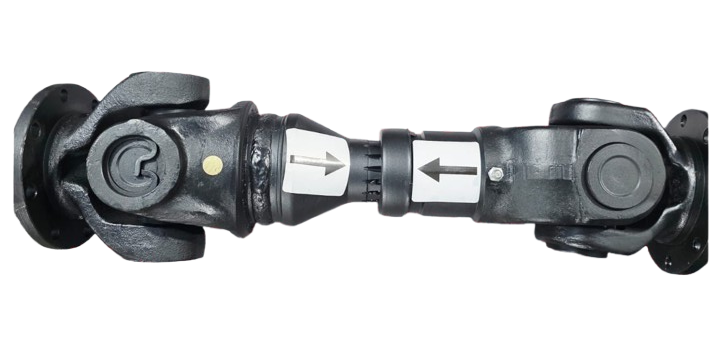
Strip away the branding and a propeller shaft is defined by a small set of dimensions. Get these and fitment is an engineering question rather than a guessing game.
- Joint centre to joint centre, at rest. Measure from the centre of the front cross to the centre of the rear cross with the vehicle on level ground and the suspension at normal ride height. Not the tube length — the working length.
- Tube outside diameter and wall. A 100 mm tube and a 76 mm tube behave very differently at the same length. Diameter drives both torque capacity and critical speed.
- Joint series. The cross is identified by its bearing cup outside diameter and the distance across the trunnion ends. Two calipers and two minutes. This is the single most useful measurement you can send us.
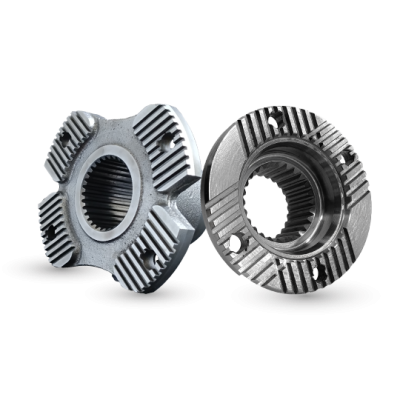
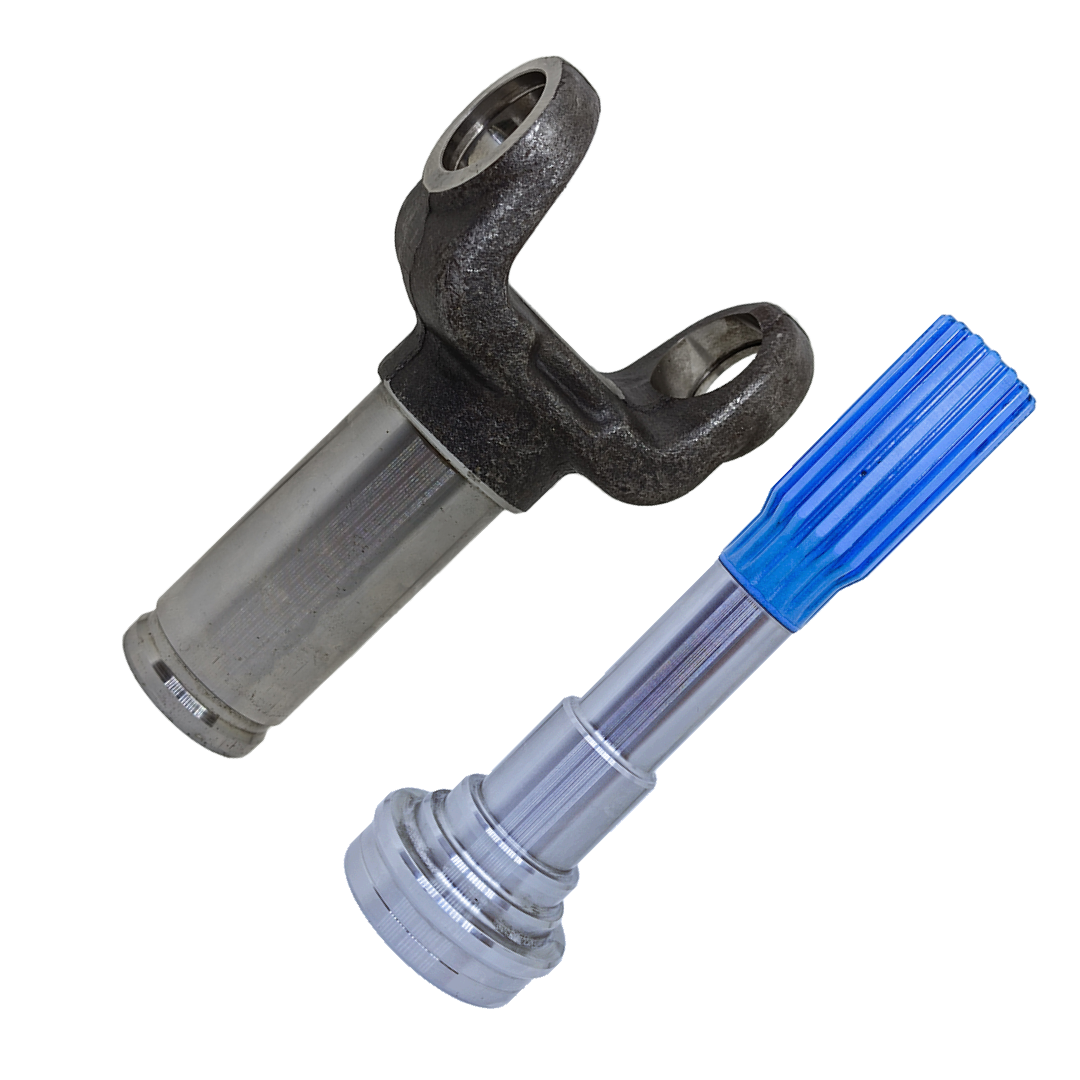
- End connections. Flange yoke (count the bolt holes, measure the bolt circle and the pilot boss) or splined sleeve yoke (count the splines and measure the major diameter).
- Slip travel. How much telescopic movement the sleeve has to give, and whether it is at the gearbox end or mid-shaft.
Photographs Are Worth More Than Model Names
Send a photo of the shaft on the bench, one of each end, and one of the chassis showing where the centre bearing sits. Nine times out of ten our engineers can identify the family from the yoke profile alone, then confirm it with your measurements.
LCV vs HCV: What Actually Changes
On a light commercial platform — a Tata 407, an Ashok Leyland Dost, a Mahindra Bolero pickup — the driveline is short, the torque is moderate, and the shaft is usually a single piece with a slip joint at the gearbox end. The engineering emphasis is on balance quality and joint smoothness, because these vehicles spend their lives at road speed with a driver sitting directly over the tunnel. A low-grade shaft here does not break; it drones, and the operator hears it every hour of every day.
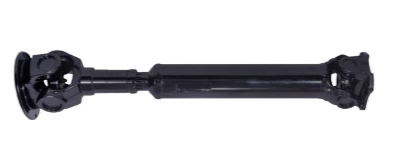
Move up to a heavy platform — Tata Signa, Eicher Pro, BharatBenz, Volvo — and two things change at once. Torque climbs, so the joint series steps up and the tube gets bigger. More importantly, the distance between gearbox and rear axle gets long enough that a single tube would exceed its critical speed.
Why Long Shafts Get Split
Every tube has a rotational speed at which it begins to whip — its critical speed. That speed falls sharply as length increases and rises with tube diameter. Past a certain wheelbase, no sensible tube diameter keeps a one-piece shaft safely below critical speed at highway rpm. So the driveline is split into two or three pieces, with a rubber-mounted centre bearing carrying the intermediate support and a coupling flange joining the sections.
That split brings its own rule: the yokes at either end of an intermediate shaft must be in phase — in the same plane. A universal joint does not transmit rotation at constant velocity through an angle; it speeds up and slows down twice per revolution. Correctly phased joints cancel that fluctuation. Rotate one yoke by 90 degrees during assembly and you have built a vibrator. We have seen shafts returned as "unbalanced" that were simply assembled out of phase after a workshop repair.
Tandem Drive, Interaxle and Through-Shafts
A 6x4 tipper or tractor with a double-differential bogie needs more than a main shaft. Drive arrives at the forward rear axle, passes through it, and continues to the rearmost axle. That short link between the two axles is the interaxle or through-shaft, and it is a demanding little component: short, so the joints work at steep angles as the bogie articulates, and carrying full drive torque.
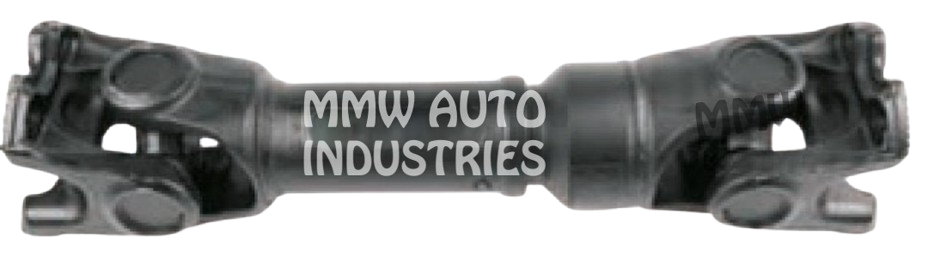
Short shafts are unforgiving about angle. The velocity fluctuation through a single U-joint grows with the square of the operating angle, and on a short shaft there is very little length over which to keep that angle small. When a bogie hits a pothole on a mine haul road, the instantaneous angle spikes. This is why interaxle shafts want a heavier joint series than the shaft length alone would suggest, and why the cross quality matters more here than almost anywhere else in the driveline. If you want the metallurgy behind that, we have written it up in our piece on UJ crosses.
Tippers Are a Shock-Load Problem, Not a Torque Problem
A loaded tipper reversing onto soft ground, spinning a wheel, then catching grip applies a torque spike that has nothing to do with the engine's rated output. The same is true of a JCB loader driving a bucket into a face. Steady-state torque calculations under-describe this duty badly.
Shock loading is why we forge rather than cast, and why the core of a cross is deliberately left tough while only the trunnion surfaces are hardened to 58-62 HRC. A hard, brittle component survives the steady load and fails on the spike. If you are choosing between suppliers on price for tipper or earthmoving work, forging versus casting is the specification difference that will decide your failure rate.
Send Us Your Measurements
Working length, tube OD, joint series and end connections. Photos help. Our engineers will cross-reference the fitment and confirm what we hold in ready stock.
Earthmoving and Off-Highway Duty
Transmission and axle shafts on backhoe loaders and excavators live a different life to a highway truck. Speeds are low, angles are large, duty cycles are repetitive, and everything is coated in abrasive dust. Two consequences follow. First, sealing at the bearing cups matters more than outright torque headroom, because grease contamination is the dominant failure mode. Second, the slip spline needs to survive constant small reciprocation under load rather than the occasional long stroke a truck sees.
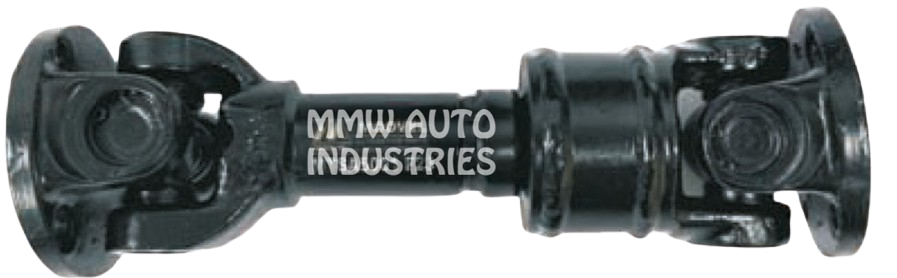
The same thinking applies to PTO and industrial drive shafts, where the driven machine, not the engine, usually sets the design load.
How We Cross-Reference Fitment
When your measurements arrive, we work through them in the same order every time.
| What We Need | Good Enough to Quote | Not Enough |
|---|---|---|
| Length | Joint centre to joint centre, at ride height | "Standard length for that model" |
| Joint | Cup OD and trunnion span, measured | "Heavy duty size" |
| Ends | Bolt count, bolt circle, or spline count | "Flange type, the usual one" |
| Duty | Tipper on haul roads / highway haulage / loader | Not stated |
From there, the fitment is matched against what we already manufacture for equivalent applications across Tata, Ashok Leyland, Eicher, BharatBenz, Mahindra, Volvo and JCB platforms. If it is a line we hold, ready stock dispatches within 72 hours from our two units at DSIDC Bawana, Delhi. If it is not, it gets built to your dimensions on the same CNC, VMC and HMC machines, with SPC measurement at the critical stages and every finished shaft 100% dynamically balanced before it leaves — no batch sampling. That process is described in detail on our quality page and in the article on dynamic balancing.
Before You Order
Two habits save more money than any supplier choice. Measure the old shaft before you scrap it, even if it is in pieces — a bent tube still tells you its diameter and its joint series. And when a shaft fails early, look at what killed it before ordering the same part again. A cross that has hammered its cups oval usually means an angle or phasing problem, not a weak cross. Replacing it without fixing the cause just buys you the same failure on a schedule.
Start with the OEM Part Finder on our products page, or send your measurements straight through our contact page or WhatsApp and we will confirm the fitment before anything is cut.