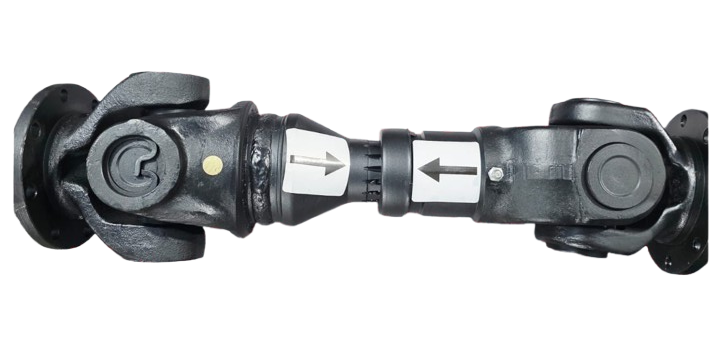
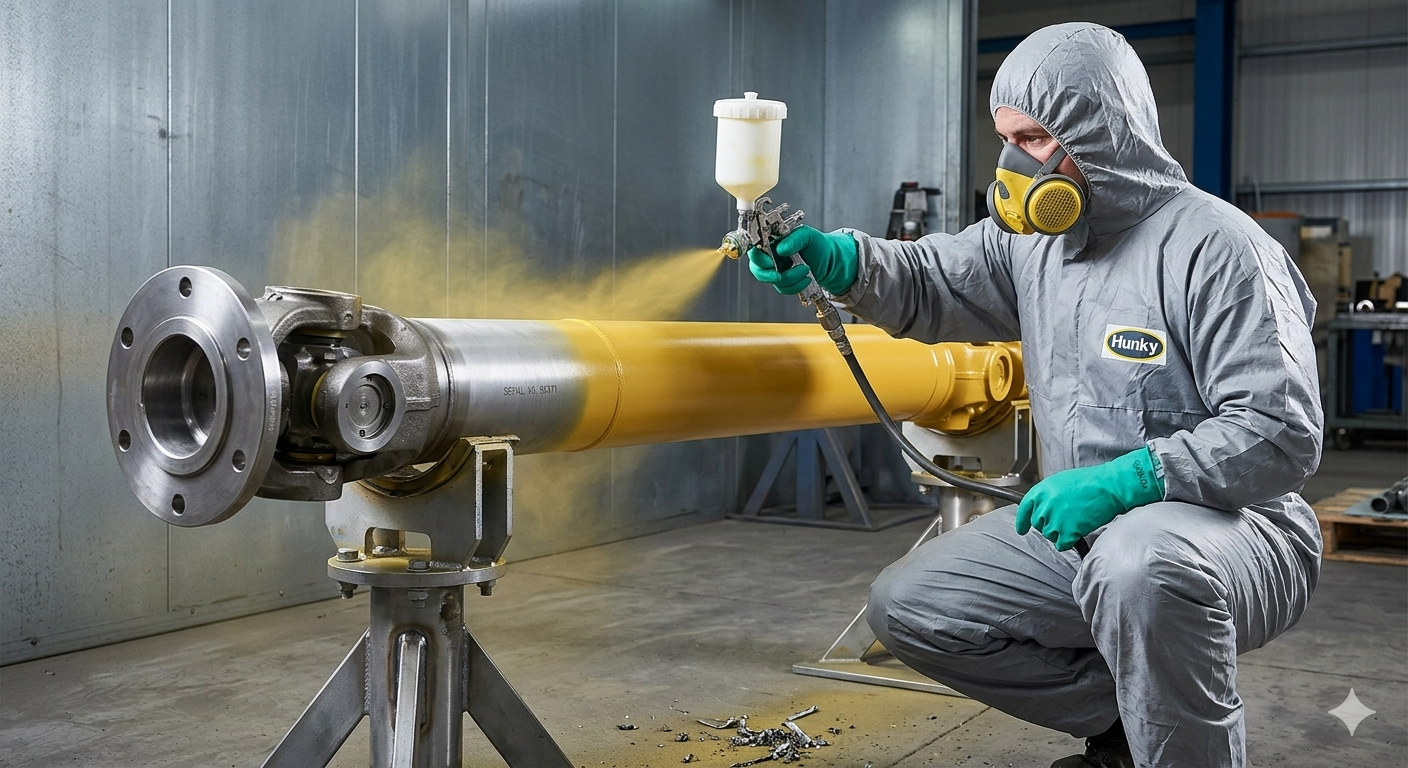
Most universal joints don't fail without warning. They announce themselves for weeks, sometimes months, before a trunnion actually lets go — a faint click on full-lock turns, a slightly damp patch of grease on the yoke, a vibration that wasn't there last service. The problem is that these signs are easy to miss if you're not looking for them specifically, and by the time the noise is obvious to a driver, the joint is usually well past the point where a simple inspection would have caught it.
Here is what to actually check, in the order that finds the most problems fastest.
The Play Test
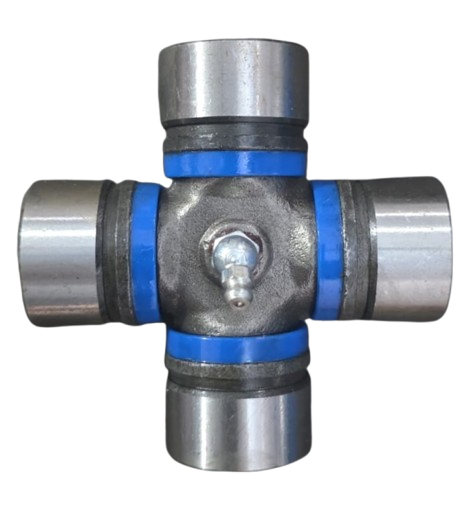
With the vehicle safely supported and the propeller shaft free to move, grip the yoke on each side of the joint — one hand on the shaft, one hand on the flange or the mating yoke — and try to rock them against each other in the direction the joint does not pivot. A healthy joint has essentially no perceptible movement here. Any looseness, clunk, or "give" you can feel with your hands means at least one trunnion bearing has worn enough clearance to let the cross move inside its cups. This is the single most reliable check and it takes about thirty seconds per joint.
Do this test with the shaft stationary and also, if you can do it safely, while someone gently rotates the shaft by hand. A joint that feels tight at one rotational position and loose at another has uneven wear across the four trunnions, which is actually worse than uniform wear — it means the load has been concentrating on one or two of them.
Grease Condition
Every universal joint has a grease nipple for a reason: the needle roller bearings inside each bearing cup need continuous lubrication, and the seals holding that grease in are the first thing to fail as a joint ages. Wipe the area around each bearing cap and look for:
- A dark, gritty ring around the seal. This is grease that has emulsified with water and road grime after the seal started letting moisture in. It's an early warning, not yet a failure.
- Rust streaks running down from the cap. Water has been inside long enough to start corroding the bearing races. This joint has a limited remaining life regardless of how it feels to the play test.
- A dry, crusted nipple that won't take grease. Either the nipple is blocked or the internal passage is packed with contaminated old grease. Both mean the bearing hasn't been properly lubricated in a while.
Listen For The Click
A worn joint operating at an angle — reversing on full lock, or climbing a steep ramp — will often produce a distinct clicking or knocking sound timed with the rotation, because the loose trunnion is impacting the inside of its bearing cup once per revolution rather than rolling smoothly. This is different from the constant droning hum of an out-of-balance shaft, which we cover in our guide to diagnosing drive shaft vibration. A rotational click that only shows up under steering angle is a joint problem specifically, not a balance problem.
Why Trunnions Wear Unevenly
The four trunnions of a cross don't share load equally in normal operation — the two on the plane of greatest articulation angle work harder than the other two. Over the life of a joint that's running at a larger angle than it should (see our piece on driveline angles and phasing), this uneven loading accelerates wear on exactly two of the four trunnions, which is why a joint can feel "mostly fine" under a static play test but still be close to failure in the plane that matters.
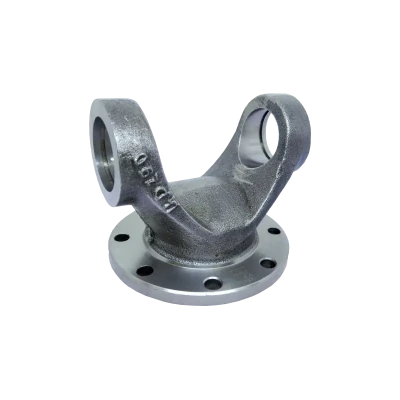
This is also why case-hardening depth matters so much on the cross itself. At MMW we case-harden UJ cross trunnions to 58-62 HRC while deliberately keeping the core tougher and more ductile — the surface resists the wear this article is describing, while the core keeps the cross from cracking under a shock load. We've written the metallurgy behind that up in detail in our piece on indestructible UJ crosses.
Found Play In A Joint?
Tell us the vehicle and where you found the play — front, rear, or centre joint — and we'll help you confirm whether it's a cross replacement or a full shaft rebuild.
When To Replace The Cross Alone vs The Whole Shaft
If the yokes themselves — the forged ears the cross sits in — show no cracking, no elongation of the bearing cup bores, and no corrosion pitting, a straight cross-and-bearing-cup replacement is usually enough. If the yoke bore itself has worn oval, or if you find play in more than one joint on the same shaft, it's worth having the whole assembly inspected rather than replacing joints one at a time as they fail — a shaft that's failing at two joints at once has usually been run with excessive play for a while, and other wear you can't see with a play test (spline wear on a sleeve yoke, for instance) is often present too.
Either way, don't wait for the click to become a bang. A cross that fails completely doesn't just strand the vehicle — a dropped shaft on a moving truck is a genuine safety event, not just a breakdown.