A heavy commercial vehicle is not a static machine. As a truck carries heavy loads over uneven terrain, the rear axle constantly moves up and down on its suspension. Because the transmission is fixed to the frame but the differential is moving, the distance between them constantly changes. This creates a critical mechanical problem: how does the propeller shaft stretch and compress while transmitting thousands of pounds of torque?
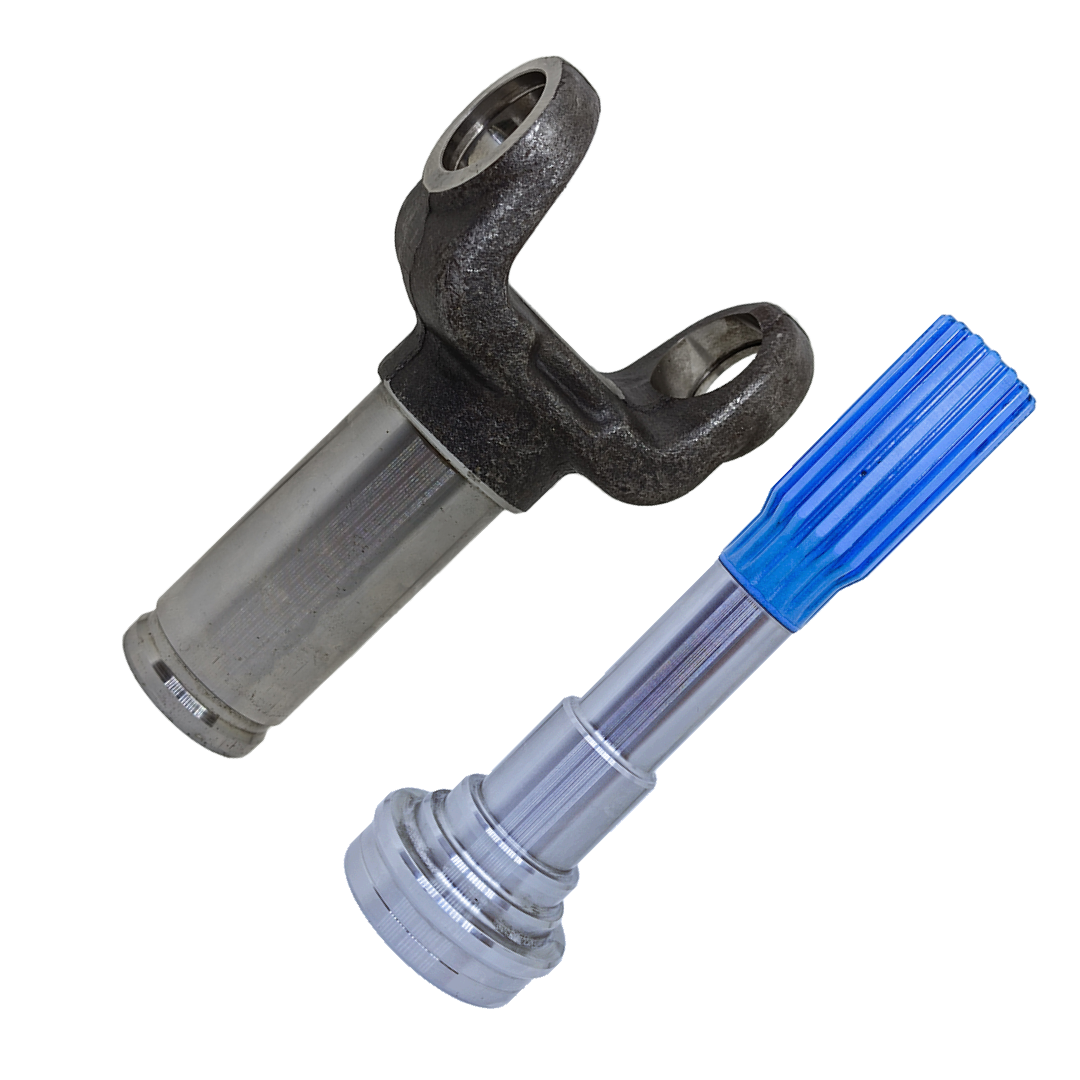
The answer is the Sleeve Yoke and Rear Teeth assembly.
The Dangers of Spline Binding
The rear teeth (a splined shaft) slide into the sleeve yoke (a hollow tube with matching internal splines). As the suspension compresses, the yoke slides further down the teeth. As the suspension decompresses, it pulls back out. This telescopic action is known as "slip movement."
If the splines are poorly machined or made from cheap steel that warps under torque, the sleeve yoke will experience spline binding. Instead of sliding smoothly, the yoke locks onto the teeth. When the suspension hits a bump, the locked propeller shaft acts as a solid battering ram, violently shoving the entire force of the impact directly into the transmission output shaft—often resulting in catastrophic transfer case explosions.
Source OEM-Grade Sleeve Yokes
MMW Auto Industries manufactures perfectly toleranced, glide-coated sleeve yokes and rear teeth for commercial vehicles globally.
Get a QuoteEuropean CNC Broaching for Micron Precision
At MMW Auto Industries, we understand that smooth slip movement relies entirely on dimensional accuracy. We utilize advanced European CNC broaching machines to cut the internal splines of our sleeve yokes.
By holding tolerances to fractions of a millimeter, we ensure that there is absolutely zero "slop" or rotational play between the yoke and the rear teeth, while still maintaining frictionless linear movement. Many of our components also receive a specialized glide-coat treatment to further reduce friction and prevent galling during heavy torque loads.
Proper Maintenance is Key
Even the best-machined sleeve yokes require maintenance. Fleet owners must ensure the dust cap (or boot) remains intact to prevent grit and road debris from entering the splines. Regular lubrication with high-pressure grease through the zerk fitting is mandatory to flush out contaminants and keep the telescopic action buttery smooth.