Take a length of steel tube, hold it at both ends, and spin it. At low speed it turns quietly. Wind the speed up and at some point the tube stops rotating about its own axis and starts bowing outward and orbiting — a metre-long tube can suddenly be sweeping an arc several centimetres across. Push past that point and it will destroy itself, along with whatever it is bolted to.
That speed is the shaft's critical speed, and everything in this article follows from it. It is also the single most common reason a buyer gets a shaft length wrong: a longer single-piece shaft looks simpler, cheaper and cleaner on paper, and it is — right up until the length crosses the line where the tube can no longer be run safely at road speed.
What Critical Speed Actually Is
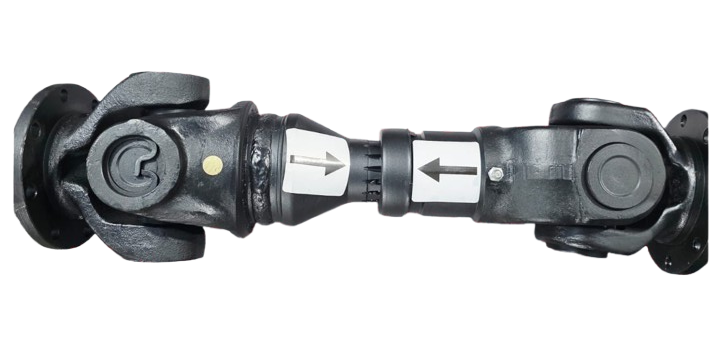
A propeller shaft is a beam supported at two ends, and like any beam it has a natural bending frequency. Flick it with a spanner while it hangs on a bench and it rings at that frequency. When the shaft's rotational speed reaches that same frequency, the tiny residual imbalance every real-world shaft carries stops being harmless and starts driving the tube in resonance. The deflection feeds the imbalance, the imbalance feeds the deflection, and the shaft "whirls."
Two dimensions govern where that frequency sits:
- Length. Critical speed falls off sharply as the shaft gets longer — it drops with the square of the length. Adding 20% to the length of a tube costs you far more than 20% of its safe operating speed. This is the dominant term, and it is why length is the first thing a driveline engineer asks about.
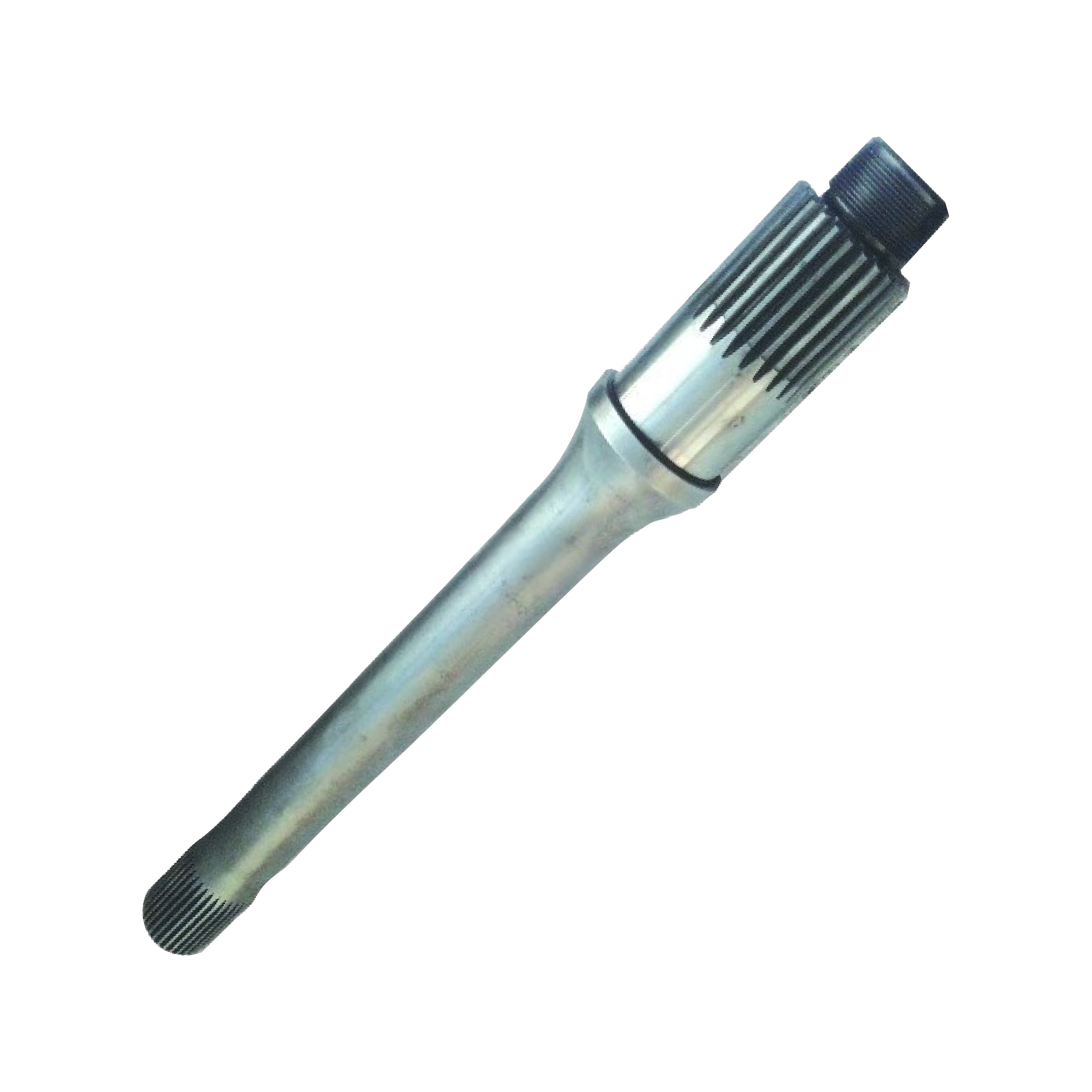
- Tube diameter. A larger outside diameter raises critical speed, because bending stiffness rises much faster than mass when you make a tube fatter. This is also why propeller shafts are hollow tube and not solid bar: a tube puts its metal out at the radius where it does the most good for stiffness, for far less weight.
Wall thickness matters too, but less than people assume — thickening the wall adds stiffness and mass together, so it buys you strength and torque capacity rather than much whirl headroom. If you have a whirl problem, you solve it with diameter or with length, not with wall.
The working rule in the industry is that the shaft must operate with a comfortable margin below its first critical speed across the vehicle's whole road-speed range, including the over-speed a truck sees running downhill on the overrun. Nobody designs to run near it. You design to stay well underneath it.
Why You Cannot Just Make a Single-Piece Shaft Longer
This is the part that catches out buyers who are simply trying to bridge a longer gap between gearbox and differential. The obvious move — order the same shaft, just longer — runs into the square-law above.
You do have one lever: increase the tube diameter to claw the critical speed back. But that lever runs out quickly for real reasons that have nothing to do with the shaft itself:
- Ground and chassis clearance. A fatter tube has to fit through the tunnel, past crossmembers, and above the axle at full suspension bump. On a loaded tipper articulating over a bad haul road, that clearance is not theoretical.
- Weight. A bigger tube is heavier, and on a commercial vehicle that weight comes straight off the payload.
- Joint size. Larger tube wants larger yokes and a larger UJ cross series, which means a heavier, more expensive joint at both ends and a different flange pattern at the axle.
- Inertia. More rotating mass out at radius means more driveline inertia for the clutch and synchros to deal with on every shift.
So on a long-wheelbase bus, a 6x4 tipper or a multi-axle haulage truck, you reach a point where no sensible single tube clears the whirl limit. At that point you stop fighting the physics and split the shaft.
What Splitting the Shaft Buys You
Cut the span in half and support the joint in the middle, and each section now behaves as a short shaft. Because critical speed climbs with the square of the reduction in length, halving the span raises the whirl limit dramatically — far more than any diameter change could have. That mid-span support is the centre bearing: a sealed ball bearing carried in a rubber isolator, bolted to a chassis crossmember, riding on the stub between the two shaft sections.
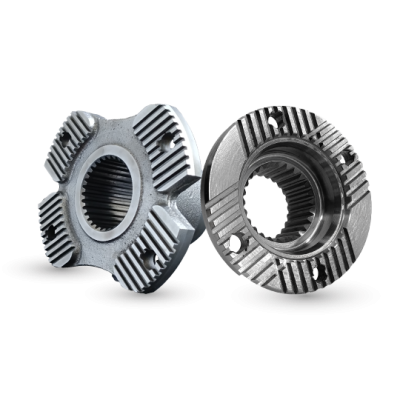
The rubber does real work. It isolates torsional and bending vibration from the chassis, and it allows small angular and axial movement as the frame twists and the suspension works, so the coupling on either side is not asked to carry bending loads it was never designed for. We cover the flange side of that joint in detail in Flange Yokes & Couplings: Ensuring Perfect Alignment.
The Honest Trade-Off
A two-piece shaft is not a free upgrade. You are buying span at the cost of parts count and service points.
| Consideration | Single-Piece Shaft | Two-Piece + Centre Bearing |
|---|---|---|
| Usable span | Limited by whirl — short wheelbase only | Long wheelbase, buses, multi-axle |
| Universal joints | Two joints | Three or more joints |
| Service points | Fewer greasing and wear points | Adds bearing + mount to the PM schedule |
| Rotating weight | Lighter, lower inertia | Heavier assembly overall |
| Fitment tolerance | Forgiving — two mounting points | Crossmember position must be right |
| Balancing | One assembly to balance | Each section, then the whole assembly |
Read that table the right way round. The single-piece column wins on almost every line — which is exactly why you should specify one whenever the length allows it. The two-piece shaft wins the only line that cannot be argued with: it lets you cover a span the single-piece physically cannot.
When a Single Piece Is the Better Answer
Short-wheelbase LCVs and pickups, most rear-axle-to-gearbox runs on light commercial platforms, and plenty of industrial and machinery drives where the two ends are close together. If the geometry gives you the span with margin to spare, adding a bearing, a mount, a crossmember and an extra joint is adding three more things that can wear out and a mid-frequency vibration complaint waiting to happen. Fewer parts, fewer problems.
Not Sure Which One You Need?
Send us the flange-to-flange length, the tube OD you are running now, and the vehicle model. We will tell you straight whether it needs one piece or two.
Phasing: The Mistake That Kills Two-Piece Shafts
A single Hookes-type universal joint running at an angle does not deliver constant output speed. It speeds up and slows down twice per revolution, and the bigger the operating angle, the bigger that fluctuation. A driveline cancels it by pairing joints: the second joint is set to produce an equal and opposite fluctuation, so the output comes out smooth.
Two conditions make that cancellation work. The joint angles at each end of a section must be equal and opposite, and the yokes at both ends of a tube must lie in the same plane — that is phasing. Get the phasing wrong on assembly, or fit a slip yoke back onto its splines one tooth out, and the joints add their speed fluctuations instead of cancelling them. The result is a torsional buzz that no amount of balancing will remove, because the shaft is not out of balance — it is out of phase.
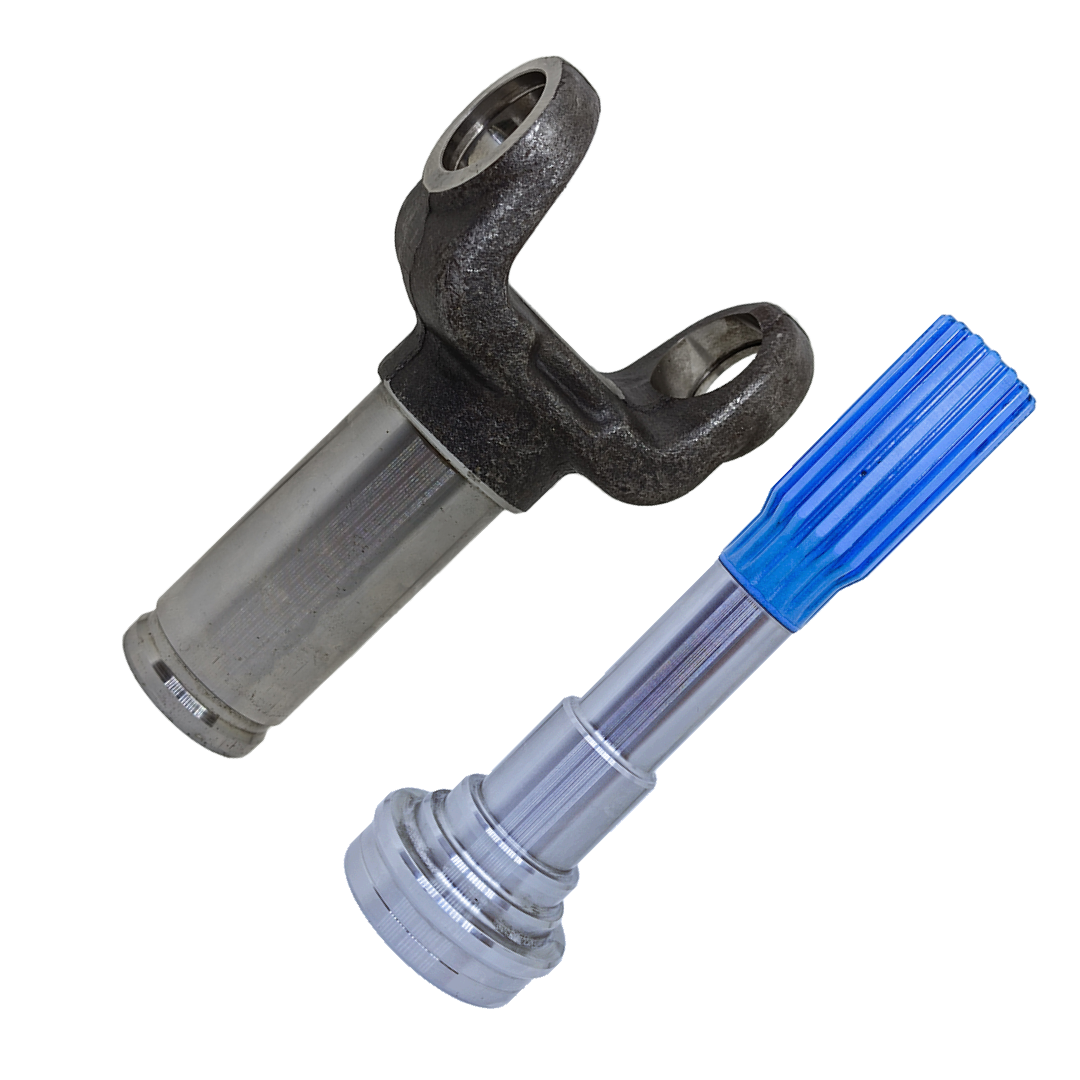
A two-piece shaft has more joints, therefore more chances to get this wrong, and it is one of the reasons we mark phasing on assemblies rather than leaving it to the fitter to guess. The same discipline applies to the splined slip joint that lets the shaft change length as the suspension moves, covered in our article on splined sleeve yokes and slip movement.
What To Specify When You Order
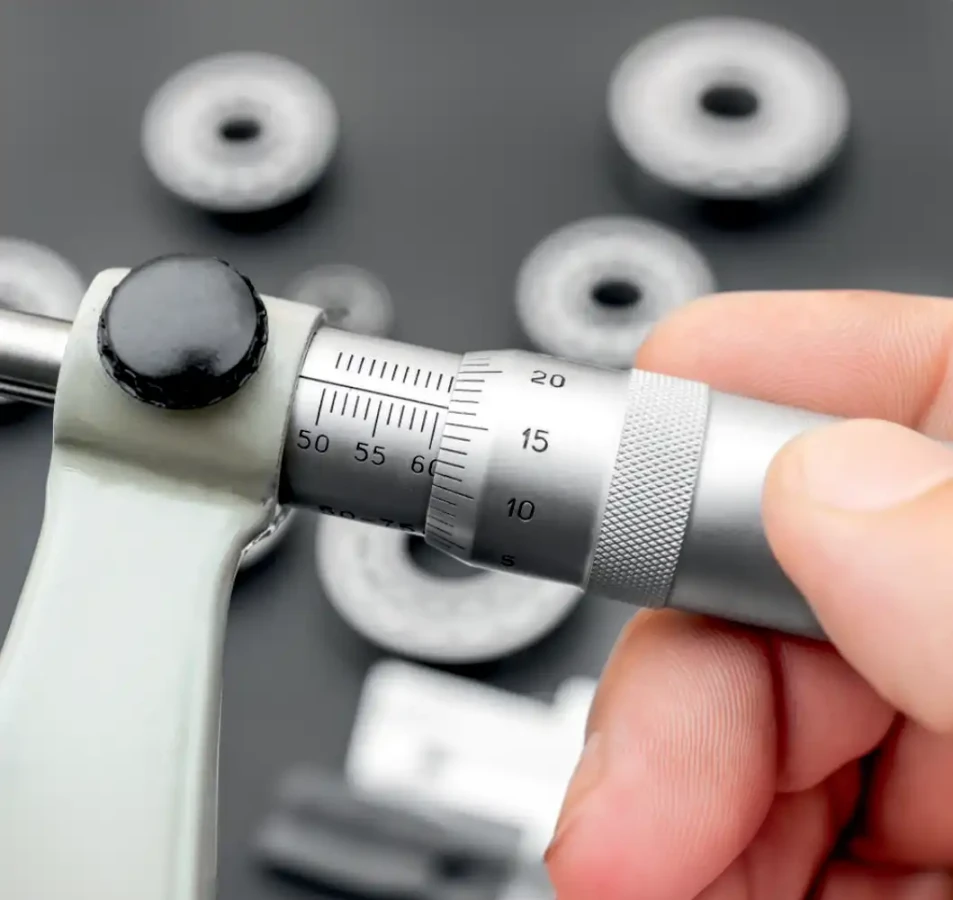
Most of the back-and-forth on a shaft enquiry disappears if the first message carries the right numbers. For either configuration, send us:
- Flange-to-flange length at normal ride height, and the vehicle's static condition when you measured it (laden or unladen makes a difference on air suspension).
- Tube OD and wall currently fitted, if you are replacing an existing shaft.
- Joint series and flange pattern at each end — bolt PCD, bolt count, spigot diameter — or the OE part number you are matching.
- Slip joint spline details and how much travel the suspension needs.
- Vehicle and duty: the model, the axle configuration, and honestly what the vehicle does. A tipper on quarry haul roads and a highway bus with the same wheelbase are not the same specification problem.
- For two-piece: the centre bearing mount position on the chassis, and the bearing bore and housing type.
On our side, every shaft that leaves the plant is 100% dynamically balanced — not batch-sampled — and on a two-piece assembly that means each section is balanced and the joined assembly is verified as a whole, because balanced sections do not automatically add up to a balanced assembly once the coupling is in between them. The reasoning behind that is set out in Why 100% Dynamic Balancing is Non-Negotiable, and the machines and measurement discipline behind it are described on our quality and infrastructure pages.
The Short Version
Specify a single-piece shaft whenever the span allows it — fewer joints, less weight, less to service. Split the shaft when the length pushes the tube's whirl speed too close to the vehicle's operating range and no sensible diameter increase will recover it. When you do split it, treat the centre bearing, its mount and the phasing of the joints as part of the specification rather than as hardware you sort out at fitting. Those are the parts that determine whether the assembly runs quietly for years or comes back as a vibration complaint at 20,000 km.