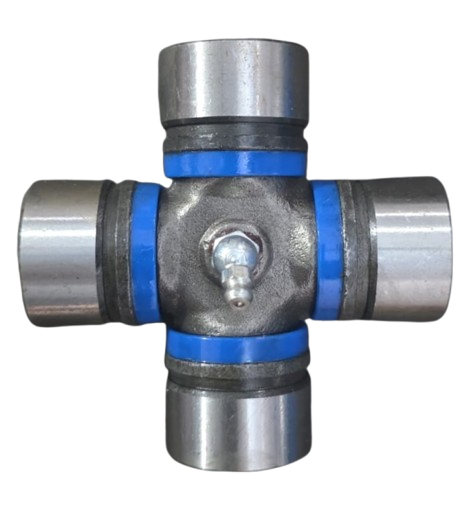
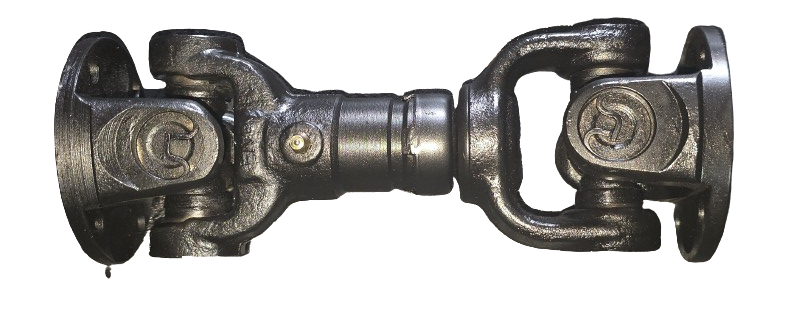
"Cross holder" and "UJ cross" get used almost interchangeably in casual conversation, and it causes real ordering mistakes. They are not the same part, they don't fail for the same reasons, and knowing which one you actually need saves a wasted delivery and a second wait for the correct component.
The Cross: The Load-Bearing Heart Of The Joint
The cross itself is the four-armed forged component — sometimes called the spider — with a trunnion on each arm. Each trunnion carries a needle roller bearing inside a bearing cup, and the whole arrangement is what actually allows torque to pass through an angle between two shaft sections. This is the component we cover in depth in our piece on indestructible UJ crosses — forged from 20MnCr05 alloy steel and case-hardened to 58-62 HRC on the trunnion surfaces specifically because this is where the highest cyclic stress in the entire driveline is concentrated.
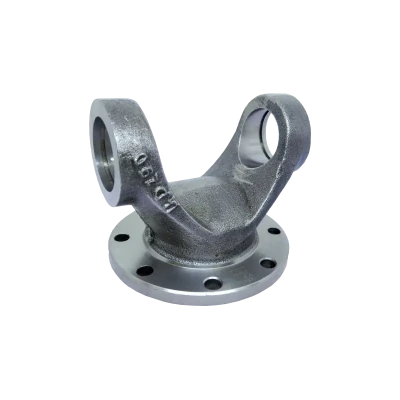
The Cross Holder: What The Cross Sits Inside
The cross holder — sometimes called the yoke or the ear — is the forged bracket that the cross's trunnions sit inside, secured by the bearing cups and typically a set of snap rings or straps. Where the cross is a wear item that takes cyclic bearing load on its trunnions, the cross holder is a structural component: its job is to hold the bearing cups rigidly in place and transfer the torque and bending load from the joint into the rest of the shaft or yoke assembly. It fails differently — not through bearing wear, but through bore elongation (the holes the bearing cups sit in wearing oval over time), cracking from fatigue, or outright deformation from a shock load severe enough to bend the forging itself.
Why Replacing Only One Sometimes Doesn't Fix The Problem
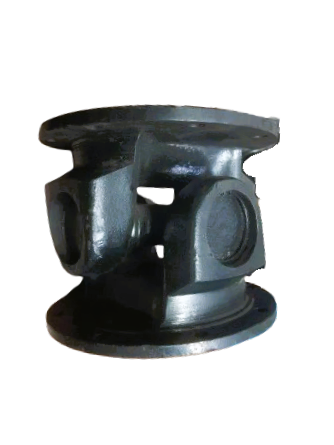
If a joint has been running with play for a while — the kind of play covered in our guide on UJ cross wear symptoms — the cross isn't always the only thing that's worn. Sustained impact loading between a loose cross and its bearing cups gradually elongates the bore in the cross holder itself. Fit a brand new cross into a holder with an elongated bore and you've reintroduced the exact play you just tried to eliminate, except now it's the holder's fault rather than the cross's. This is why a proper inspection checks both components rather than assuming the cross is always the culprit.
How To Tell Them Apart When Ordering
| Component | What It Does | How It Fails |
|---|---|---|
| UJ Cross | Four-trunnion forging that lets torque pass through an angle | Bearing wear, play, trunnion surface fatigue |
| Cross Holder / Yoke | Structural bracket holding the bearing cups and cross in place | Bore elongation, cracking, deformation from impact |
When in doubt, send a photo of the whole assembly rather than trying to name the part over the phone — it's faster and more accurate than describing it, the same principle covered in our measurement guide.
Not Sure Which Part You Need?
Send us a photo of the joint and tell us what you're seeing — play, noise, or visible damage — and we'll help identify exactly which component needs replacing.
Buying Them As A Matched Assembly
For a repair where either component shows wear, replacing the cross and holder together as a matched assembly removes the risk of pairing a new part against a worn mating surface entirely. It costs more than replacing one component alone, but it's the more reliable fix when a joint has already failed once.